GTM Engine · · 6 min read
What go-to-market actually is, and why most teams run it in the wrong order
 By Harshil Jani
Go-to-market (GTM) strategy is the plan for how a product reaches the people who pay for it: who exactly you sell to, why they should pick you, what you charge, where you find them, how a yes happens and when to scale. It is a sequence of decisions, and the order you make them in decides whether the rest works.
In this article
- The six decisions in order, each with a company that got it right.
- What running it backwards looks like, as TechCrunch reported it at one AI sales startup.
- A one-week exercise to check the order in your own team.
What are the six decisions, and in what order?
GTM is often explained as a list of departments: pricing, channels, sales, launches. I find it more useful as a chain, where each decision takes its inputs from the one above it, so the channel you pick depends on where your buyer already is, and the price depends on what you are positioned against.
Who exactly are you selling to?
Superhuman is the cleanest example I know. In 2017 Rahul Vohra asked users how they would feel if they could no longer use the product, and only 22% said "very disappointed", well short of the 40% rule of thumb Sean Ellis drew from his startup surveys. Instead of selling wider, Vohra focused on founders, managers, executives and business development, "temporarily ignoring all other personas," and built the roadmap around them (Rahul Vohra, First Round Review, 2018).
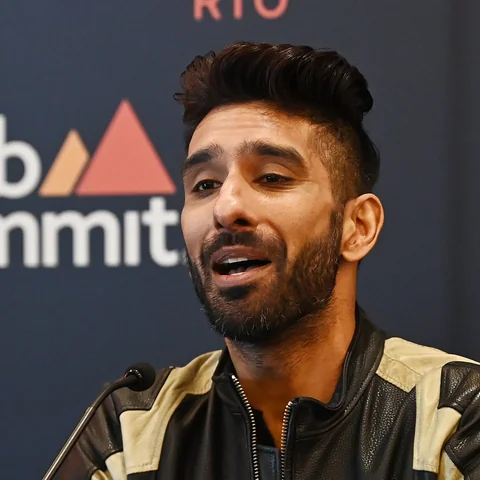
Reorienting Superhuman around this single metric paid off.
Rahul Vohra Founder and CEO, Superhuman
The jump from 22% to 33% came from scoring only the segment Superhuman chose, so it measures focus rather than new demand, and product work for that segment then took it to 58%.
Superhuman's "very disappointed" score
Why should that buyer pick you?
In a July 2013 memo, before Slack's public preview, Stewart Butterfield wrote to his team that they were "unlikely to be able to sell 'a group chat system' very well", because not enough people were shopping for one, so Slack would sell what he called "organizational transformation" instead (Stewart Butterfield, 2014).
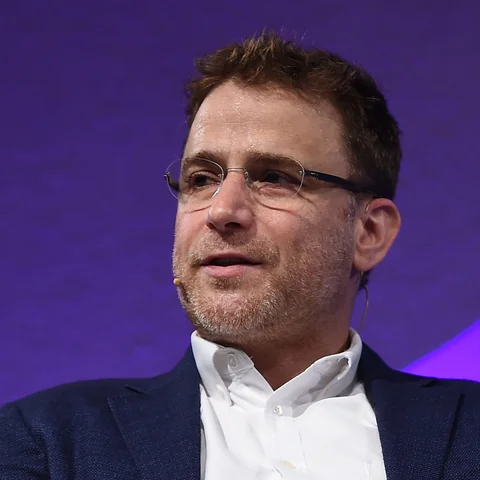
Or, they could sell horseback riding. Being successful at selling horseback riding means they grow the market for their product while giving the perfect context for talking about their saddles.
Stewart Butterfield Co-founder, Slack
Positioning is choosing which comparison the buyer makes, and Butterfield chose it before the preview launched.
What should you charge, and for what?
Price follows from the buyer and the position, which is why I put it third. Slack's billing policy says "you should only be billed for what you use" and credits seats that go inactive, which reads to me like a price designed for a buyer who has paid for unused software before (Slack fair billing policy). Price also decides which channels you can afford: a product worth a few hundred dollars a year is hard to sell with a salesperson per customer, in my view, whereas a five-figure contract can carry one.
Which one channel will you learn from first?
Andrew Chen, who worked on growth at Uber, says its first market was not San Francisco but "5pm at the Caltrain station at 5th and King St.", where ops staff used an internal tool nicknamed Starcraft to text nearby drivers "Go to the train, lots of riders!" (Andrew Chen on Lenny's Newsletter, 2021).


Your product's first atomic network is probably smaller and more specific than you think.
Andrew Chen General partner at a16z, formerly growth at Uber
In Chen's account, Uber made one moment in one place work before widening to the city. His example is about a market rather than a channel, but I would apply the same narrowness: run one channel long enough to learn from rather than five at a fifth of the effort each.
How does a yes actually happen?
Early Stripe was sold by its founders. Paul Graham, whose Y Combinator funded Stripe, describes how, when anyone agreed to try it, the Collisons set it up on the spot instead of sending a link (Paul Graham, 2013).
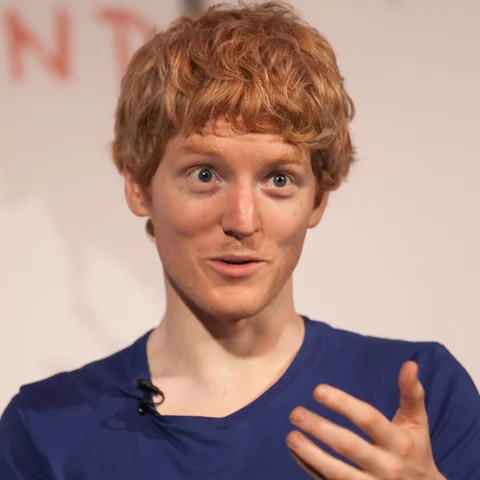
Right then, give me your laptop
Patrick and John Collison Stripe's founders, as Paul Graham tells it
Mark Roberge, HubSpot's founding chief revenue officer, puts it as stages in order: product-market fit, then go-to-market fit, then "Growth & Moat" (Stage 2 Capital). Stage 2 Capital, Roberge's own fund, describes that second stage as the one where companies hire sales leaders and scale beyond founder-led efforts (Stage 2 Capital blog).
When do you measure, automate and scale?
Measurement comes last, and Superhuman kept it to one number by making the "very disappointed" share the only key result in an OKR (First Round Review, 2018). The table gives a warning sign for each step.
| Step | The decision | Sign it is not done yet |
|---|---|---|
| 1. Buyer and problem | Who exactly, with which costly problem | Your customer is "SMBs" |
| 2. Positioning | Why you, against what they do today | Prospects still ask what you do after the demo |
| 3. Price and package | What they pay, for which outcome | Deals close only after a discount |
| 4. One channel | Where those buyers already look | Budget spread across five channels in month one |
| 5. Sales motion | Self-serve, founder-led or a sales team | Reps hired before the founder can close |
| 6. Measure, then scale | What to automate, hire for and spend on | Buying a tool to fix a reply rate |
What does running it backwards look like?
In March 2025 TechCrunch reported on 11x, an AI sales-rep startup backed by a16z and Benchmark. ZoomInfo, listed as a customer, ran a one-month trial and walked away (TechCrunch, 2025), and anonymous employees made sharper claims, one saying "We were losing 70-80% of customers that came through the door."
During the pilot, 11x's product performed significantly worse than our SDR employees, and we did not move forward afterward.
A ZoomInfo spokesperson to TechCrunch, March 2025
11x disputes this and told TechCrunch its "retention rate is currently 79%". Whichever number is right, ZoomInfo's verdict is the part I would keep: it already had SDRs with a settled buyer and message, and against them the tool lost. My reading is that software scales inputs someone has already decided, which is Lemkin's point. I have not found a study that counts how many teams buy tools before settling those inputs, so the "most" in this article's title is my judgement rather than a statistic.
SaaStr's Jason Lemkin, an AI agent enthusiast whose company has deployed more than 20 of them, draws the same line: if outbound does not work with humans, an AI SDR "will just execute that bad playbook at infinite scale, faster, and with more consistency" (SaaStr, 2026).
Why does AI make the order matter more?
I think step 6 is now the easiest step to buy. In OpenAI's study of about 1.1 million sampled ChatGPT conversations on consumer plans, writing was the biggest work use, at 40% of work-related messages in June 2025 (OpenAI and NBER, 2025). The paper does not break out sales email, and about two-thirds of that writing is editing text people already wrote, but it shows where the habit is forming.
40%
of work-related ChatGPT messages on consumer plans were writing tasks, June 2025
A mystery for the ages:
- Jason Lemkin (@jasonlk) August 14, 2026
Why almost every AI outbound email I get is worse than what Claude would write
My guess at Lemkin's mystery is that the model is rarely the problem: the sender had not settled who the email was for or why they should care, so the AI wrote fluently about nothing.
Gmail now polices the result. Since February 2024 Gmail has required all senders to Gmail accounts to keep the spam rate in its Postmaster Tools below 0.3% (Google, Email sender guidelines), so scaling a vague message has a hard ceiling.
0.3%
The spam rate all senders to Gmail accounts must stay below, since 1 February 2024
Run it this week
- Write the buyer sentence: role, company type and size, and the problem, in one line. If you cannot name ten real companies that fit, it is too vague; rewrite it until you can.
- Ask your users the Superhuman question and count the "very disappointed" answers.
- Write your position in two lines: for [buyer] who [problem], [product] does [outcome], unlike [what they do today].
- Pick one channel for six weeks and the one number you will judge it on.
- Audit what you pay for: mark which step each tool, hire and campaign serves, and pause anything serving step 6 while steps 1 to 3 are blank.
Questions people ask
What does GTM stand for in startups?
GTM stands for go-to-market: the plan for who a startup sells to, why they should buy, what it charges, where it finds customers and how deals close.
Is a go-to-market strategy only for new products?
No. The same six decisions apply whenever the buyer, the market, the price or the channel changes, including taking an existing product somewhere new.
What is an example of a go-to-market strategy?
Slack is a compact one: Stewart Butterfield chose to sell "organizational transformation" rather than group chat, and Slack's billing policy credits paid seats that go inactive.
What are the steps of a go-to-market strategy?
Six decisions in order: buyer and problem, positioning, price and package, one channel, the sales motion, and finally measurement and scale.
Next week: what a GTM engineer actually does, and how the role differs from SDRs, RevOps and sales engineers.
Harshil
Sources
- Rahul Vohra, First Round Review, 2018 review.firstround.com
- Stewart Butterfield, 2014 medium.com
- Slack fair billing policy slack.com
- Andrew Chen on Lenny's Newsletter, 2021 lennysnewsletter.com
- Paul Graham, 2013 paulgraham.com
- Stage 2 Capital stage2.capital
- Stage 2 Capital blog stage2.capital
- TechCrunch, 2025 techcrunch.com
- SaaStr, 2026 saastr.com
- OpenAI and NBER, 2025 nber.org
- Google, Email sender guidelines support.google.com